The right receipt printer keeps checkout moving, produces readable receipts, and fits smoothly into your existing POS setup. This roundup compares 10 thermal models for shops, restaurants, mobile sellers, and small businesses.
We focus on the details that matter most at checkout: printing speed, paper width, connection options, operating-system support, cutter design, and installation requirements.
Best 10 Receipt Printers Picks for 2026
Best USB Pick
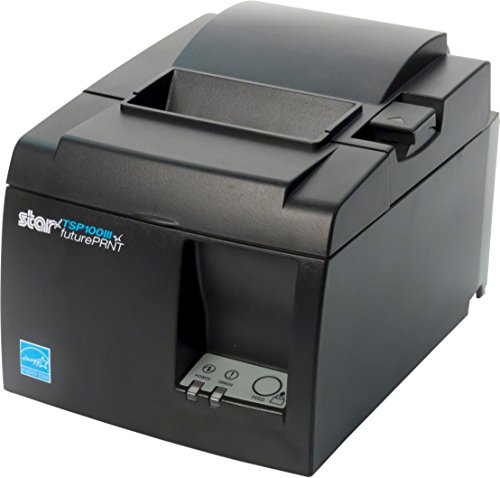
- Fast 250mm-per-second thermal printing
- Plug-and-print USB connectivity
- Compact design with internal power supply
Best For: USB-connected POS systems and iPad or iPhone setups
Reliable Square Stand Option

- Works with Square Stand and Square Register
- Prints up to 250mm per second
- Auto-cutter rated for 1.5 million cuts
Best For: USB-only Square POS setups
Best Ethernet Model

- Wired Ethernet connectivity
- Prints up to 250mm per second
- Certified with Lightspeed
Best For: Networked POS stations using Lightspeed
Best Bluetooth Receipt Printer
- Prints up to 250 mm/s
- Bluetooth works with iOS, Android, and Windows
- Compact design with internal power supply
Best For: Mobile POS setups and delivery-focused businesses
Best Value Receipt Printer
Rongta 80mm Thermal POS Printer

- 250 mm/s printing with auto-cutter
- USB, serial, and Ethernet connectivity
- No ink or ribbon required
Best For: Wired retail, restaurant, and kitchen POS stations
Best High-Speed Receipt Printer

- Prints at up to 310 mm/s
- USB, serial, and Ethernet interfaces
- Paper-saving mode and ENERGY STAR certification
Best For: High-volume retail and restaurant transactions
Best USB-Only Speed
NetumScan 80mm Thermal Receipt Printer

- Up to 300mm/s printing
- Auto cutter and wall-mount option
- Windows, Mac, and Linux support
Best For: USB-based desktop POS setups needing fast receipt output
Best Interface Flexibility
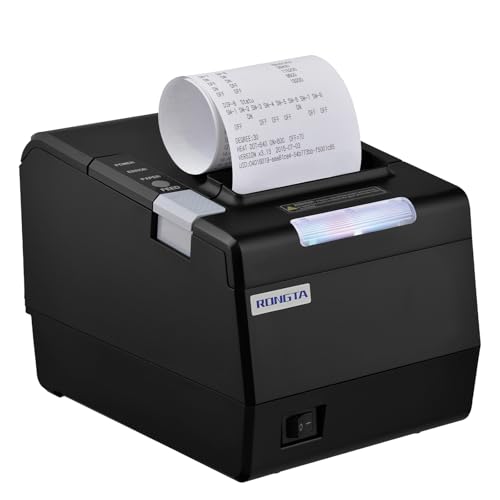
- USB, serial, and Ethernet interfaces
- Supports 80mm and 58mm paper
- Auto cutter with configurable alerts
Best For: Wired restaurant or retail systems needing multiple connection choices
Best Wired Network Value
Rongta RP332 80mm Thermal Printer

- Up to 250mm/s printing
- USB, serial, and Ethernet connectivity
- Cash-drawer and auto-cutter support
Best For: Wired POS and kitchen-printing setups using desktop computers
Best USB Pick – Star Micronics TSP143IIIU
The Star Micronics TSP143IIIU is a practical choice among receipt printers for businesses that want a straightforward USB setup. Its compact design, fast 250mm-per-second printing, and compatibility with iOS, Android, and Windows make it well suited to countertop point-of-sale use.
Best For: USB-connected POS systems, including iPad and iPhone setups.
Pros:
- Fast printing of up to 250mm per second.
- Plug-and-print USB connection with support for iOS, Android, and Windows.
- Drop-in paper loading and a De-Curl function for flatter receipts.
- Compact footprint with an internal power supply.
Cons:
- Uses USB connectivity rather than Ethernet or wireless networking.
- Designed for monochrome thermal printing only.
Choose this model if simple USB deployment and broad device compatibility matter most. Its built-in power supply and small footprint can also help keep a busy checkout area organized.
Reliable Square Stand Option – Epson TM-T20III
The Epson TM-T20III is a dependable option for retailers and hospitality businesses comparing receipt printers for Square-based checkout setups. It delivers printing speeds up to 250mm per second and includes an auto-cutter rated for up to 1.5 million cuts.
Best For: Square Stand and Square Register users who need a USB-only POS printer.
Pros:
- Compatible with Square Stand and Square Register.
- Fast print speeds of up to 250mm per second.
- Auto-cutter rated for up to 1.5 million cuts.
- Enhanced print options can reduce paper usage by up to 30 percent.
Cons:
- USB connectivity only; it does not provide Bluetooth or Wi-Fi.
- Square use requires a Square Stand or Square Register.
This Epson makes the most sense when your POS environment already centers on compatible Square hardware. Its cutter rating, paper-saving options, and two-year full warranty support regular retail or hospitality use.
Best Ethernet Model – Star Micronics TSP143IIILAN
The Star Micronics TSP143IIILAN is one of the more suitable receipt printers for businesses that prefer a wired Ethernet connection. It prints up to 250mm per second, supports iOS, Android, and Windows environments, and is certified with Lightspeed.
Best For: Lightspeed users and networked checkout stations requiring LAN connectivity.
Pros:
- Wired Ethernet connectivity for networked POS environments.
- Fast printing of up to 250mm per second.
- Drop-in paper loading and De-Curl technology for flat receipts.
- Compact body with an embedded power supply.
Cons:
- LAN connection only, so it is less flexible for USB-only installations.
- Does not offer Bluetooth or Wi-Fi connectivity.
This model is a strong fit when a stable wired network connection is more useful than wireless convenience. Its compact footprint and Lightspeed certification make it especially relevant to compatible retail and service counters.
Most Flexible Interfaces – Vretti V330M
The Vretti V330M is a versatile choice among receipt printers for businesses needing USB, serial, and LAN connections. It supports Windows, Mac, and Linux systems using ESC/POS commands, while its 80mm paper format, wall-mount design, and partial auto-cutter suit retail and kitchen environments.
Best For: Retail, restaurant, hotel, and kitchen setups using compatible ESC/POS systems.
Pros:
- Supports USB, serial, and Ethernet connections.
- Fast printing up to 260mm per second.
- Includes a partial auto-cutter rated for up to 1.5 million cuts.
- Supports wall mounting and includes cables, adapter, manual, and test paper.
Cons:
- Does not support Bluetooth or Wi-Fi.
- Not compatible with several platforms and services, including Square, Clover, Shopify, and PayPal.
- Requires an ESC/POS-compatible Windows, Mac, or Linux setup.
The V330M stands out for interface flexibility and included accessories, but software compatibility deserves careful checking before purchase. It is best suited to businesses with a supported ESC/POS workflow rather than mainstream tablet-based POS services.
Best Bluetooth Receipt Printer – Star Micronics TSP143IIIBi
The Star Micronics TSP143IIIBi is a practical choice for businesses seeking receipt printers with wireless convenience. Its Bluetooth connection supports iOS, Android, and Windows devices, while the compact design and internal power supply help conserve counter space.
Best For: Retail, hospitality, and businesses using iOS, Android, or Windows POS devices.
Pros:
- Prints up to 43 receipts per minute at 250 mm/s.
- Bluetooth pairing provides a simple wireless setup.
- Drop-in paper loading and an auto-cutter streamline daily use.
- Certified for Uber Eats, Grubhub, and DoorDash.
Cons:
- Bluetooth may be less suitable than wired interfaces for fixed POS installations.
- Uses 73–80 mm thermal paper rather than standard office paper.
Choose this model if easy mobile-device integration and a small footprint matter most. Its 203 dpi output, de-curl function, and internal power supply make it a well-rounded option for countertop receipt printing.
Best Value Receipt Printer – Rongta 80mm Thermal POS Printer
The Rongta 80mm Thermal POS Printer is a cost-conscious option among receipt printers, using direct thermal printing without ink cartridges or ribbons. It combines an auto-cutter with USB, serial, and Ethernet connectivity for conventional POS stations.
Best For: Retail stores, restaurants, kitchens, food trucks, and other wired POS environments.
Pros:
- Prints at up to 250 mm/s and includes an auto-cutter.
- USB, serial, and Ethernet ports support flexible wired setups.
- Wall-mount holes can help save space.
- Overheating protection and a one-year warranty support regular use.
Cons:
- Does not include Wi-Fi or Bluetooth.
- Not compatible with DoorDash, Uber Eats, Square, or Grubhub according to the supplied notes.
- Requires 80 mm receipt paper.
This printer makes the most sense when dependable wired connectivity and low operating costs take priority over wireless features. Confirm POS and app compatibility before purchasing, especially for delivery-platform workflows.
Best High-Speed Receipt Printer – Epson TM-T20IV
The Epson TM-T20IV is a high-speed option for receipt printers, reaching up to 310 mm/s and supporting USB, serial, and Ethernet connections. Its paper-saving mode, ENERGY STAR certification, and flexible mounting options suit busy retail and restaurant counters.
Best For: Busy retail stores, restaurants, cafés, and businesses needing fast wired or ePOS-compatible printing.
Pros:
- Prints at up to 310 mm/s for faster transactions.
- USB, serial, and Ethernet interfaces support varied POS systems.
- Works with Windows, Android, and iOS through Epson ePOS technology.
- Includes paper-saving features, wall-mount hardware, and a three-year limited warranty.
Cons:
- Primarily designed for wired connectivity rather than built-in Bluetooth or Wi-Fi.
- Its 80 mm paper format may not fit every existing POS setup.
For businesses processing frequent transactions, the TM-T20IV stands out for speed, connectivity, and durability claims including up to 2 million auto-cuts. It is a strong fit when long-term countertop reliability and integration flexibility outweigh the need for wireless printing.
Best USB-Only Speed – NetumScan 80mm Thermal Receipt Printer
If you need fast, straightforward receipt printers for a Windows, Mac, or Linux computer, the NetumScan 8360 focuses on USB-connected operation and quick thermal output. Its auto cutter, wall-mount option, and one-touch paper loading make it practical for retail counters, restaurants, and other business settings.
Best For: Businesses that need a USB-only 80mm printer with fast output and simple desktop installation.
Pros:
- Prints at speeds up to 300mm/s.
- Auto cutter helps keep finished receipts from falling to the floor.
- Supports Windows, Mac, and Linux, with wall-mount holes for space-saving installation.
- Overheating protection and a one-touch cover support routine use and maintenance.
Cons:
- USB-only; it does not support LAN, Wi-Fi, or Bluetooth.
- Not compatible with Square POS, Clover, Shopify, Lightspeed, Uber Eats, or mobile devices according to the supplied notes.
The NetumScan is a strong fit when speed and uncomplicated wired printing matter most. Confirm that your POS software and computer support the printer before ordering, especially if you rely on a mobile or cloud POS platform.
Best Interface Flexibility – Rongta RP850 80mm POS Printer
The Rongta RP850 is one of the more flexible receipt printers here for businesses that want multiple wired connection options. It supports USB, serial, and Ethernet connections, accepts 80mm or 58mm paper, and includes an auto cutter for restaurant, retail, and point-of-sale use.
Best For: Restaurants and retail businesses that need USB, serial, or Ethernet connectivity with configurable printer settings.
Pros:
- Offers USB, serial, and Ethernet interfaces, including TCP/IP installation.
- Supports Windows, Mac, and Linux systems and ESC/POS/OPOS commands.
- Works with 80mm or 58mm paper and includes an auto cutter.
- Sound and light order reminders can be adjusted or disabled, and wall mounting is supported.
Cons:
- No Wi-Fi or Bluetooth, and it does not work with iPhone, iPad, or Android devices.
- The supplied notes list incompatibility with Square, Clover, Shopify, Lightspeed, Uber Eats, and several other platforms.
- Users must distinguish between the 80mm and 58mm driver options.
The RP850 makes sense for a wired POS environment where Ethernet or serial connectivity is valuable. Its configuration options are useful, but compatibility should be checked carefully before purchase.
Best Wired Network Value – Rongta RP332 80mm Thermal Printer
The Rongta RP332 is a practical option among receipt printers for businesses that want wired USB, serial, or Ethernet connectivity without relying on wireless networking. It prints up to 250mm/s, drives a cash drawer, supports ESC/POS and OPOS commands, and can be wall mounted.
Best For: Restaurants and offices using Windows, Mac, or Linux computers with a wired POS or TCP/IP setup.
Pros:
- Supports USB, serial, and Ethernet connections, including TCP/IP installation.
- Prints at speeds up to 250mm/s and includes an auto cutter.
- Supports cash-drawer control and ESC/POS/OPOS commands.
- Accepts 80mm or 58mm paper and includes a test paper roll and driver USB disk.
Cons:
- No Wi-Fi or Bluetooth support.
- Not compatible with Square, PayPal, Clover, Shopify, Lightspeed, or mobile devices according to the supplied notes.
- Driver selection requires attention because the included software covers both 80mm and 58mm models.
The RP332 is a solid choice for a conventional wired checkout or kitchen-printing workflow. Its Ethernet option adds network flexibility, while the broad platform incompatibility makes pre-purchase software verification essential.
How We Picked These Receipt Printers
We selected these 10 Receipt Printers based on the features that most affect everyday POS use. Our comparison considers print speed, 80mm paper compatibility, auto-cutters, connection types, device and operating-system support, cash-drawer connectivity, and suitability for retail or food-service environments.
We also included a mix of established models from Star Micronics and Epson alongside more budget-focused options from Rongta, NetumScan, and Vretti. That gives buyers a useful range of reliability, flexibility, and price expectations.
Quick Comparison
| Best For | What to Look For | Useful Features |
|---|---|---|
| Established retail POS | Reliable USB or Ethernet connection | Auto-cutter, internal power supply |
| Restaurants and busy counters | Fast printing and network support | Ethernet, ESC/POS compatibility |
| Tablet-based checkout | Wireless or device-friendly connectivity | Bluetooth, iOS and Android support |
| Budget installations | Broad compatibility at lower cost | USB, serial, Ethernet, cash-drawer support |
Key Buying Factors for Receipt Printers
Connectivity and Compatibility
Choose the connection your POS system actually supports. USB is usually the simplest option for one workstation, while Ethernet is better for a shared printer on a wired network. Bluetooth can be convenient for tablets and mobile checkout, but confirm compatibility with your specific iOS, Android, Windows, or POS application before buying.
Print Speed and Cutter Design
Higher speeds matter most in busy stores and restaurants. Models rated around 300mm/s or faster can reduce queues, while an automatic cutter makes handoffs cleaner and faster. A cutter is especially useful when staff print frequently throughout the day.
Paper Size and Operating Costs
Most models here use 80mm, or 3 1/8-inch, direct-thermal paper. Direct thermal printing does not require ink or toner, but you still need a steady supply of compatible rolls. Check roll dimensions, storage conditions, and whether your preferred supplier carries the paper at a reasonable price.
Installation and Workspace
Measure the counter and check where the power supply and cables will sit. An internal power supply can reduce clutter. For restaurants, consider whether the printer supports the interface, network setup, and ESC/POS commands used by your kitchen or POS software.
Who Should Buy Which Receipt Printers?
Choose a Star Micronics or Epson model if dependable brand support, established POS compatibility, and frequent daily use are your priorities. These are sensible choices for retailers and businesses that want a more conventional commercial setup.
Choose a Bluetooth model if your checkout runs primarily on a compatible phone or tablet and you want fewer cables. Verify the application and device requirements before committing.
Choose a Rongta, NetumScan, or Vretti printer if you need affordable 80mm thermal printing and have confirmed that its drivers, interfaces, and command set work with your POS software. These options can suit small businesses, occasional sellers, and straightforward counter installations.
Before ordering, confirm the printer interface, paper width, supported operating system, return policy, and cash-drawer requirements. Compatibility is more important than a small difference in advertised print speed.