Portable NAS enclosures give you shared storage, backup, and media access without the complexity of a full server rack. They’re a smart fit for travelers, creators, small teams, and home users who want local control over their files.
In this roundup, we focus on practical options that balance portability, drive support, network speed, and ease of setup so you can choose the right enclosure for your workflow.
Best 10 Portable Nas Enclosures Picks for 2026
Outdoor Backup NAS
PocketCloud Portable NAS for SSD and SD Card

- M.2 NVMe slot supports up to 8TB, expandable to 16TB with Dock.
- Five backup paths include SD, USB, Wi‑Fi 6, AP mode, and Ethernet via Dock.
- Dual batteries and LCD make it useful for field backup and travel.
Best For: Traveling creators who want battery-powered, private backup
Speed-First NVMe Array
TERRAMASTER D4 SSD 4-Bay Enclosure

- 40Gbps USB-C support is built for very fast transfers.
- Holds four M.2 NVMe SSDs for up to 32TB of storage.
- Tool-free bays and active cooling suit busy workflows.
Best For: Creators who want a compact, high-speed SSD enclosure
Starter-Friendly Personal NAS
UGREEN DH2300 2-Bay for Beginners

- Simple 2-bay personal NAS for photos, videos, and files
- AI tagging, duplicate cleanup, and automatic backups
- No Docker or VMs; wired setup is recommended
Best For: Beginners who want private, easy personal storage
Compact All-SSD NAS

- Palm-sized 8-bay NVMe NAS with 10GbE and DDR5
- Whisper-quiet design with SSD heatsinks and cooling
- Diskless model supports up to 64TB total capacity
Best For: Users who need a compact, silent, high-speed SSD NAS
Creator and Team NAS

- Dual 10GbE and SSD expansion for fast creator workflows
- Docker, VMs, and surveillance support in UGOS Pro
- Up to 144TB capacity with multiple drive and SSD options
Best For: Creators and teams needing a fast, expandable local NAS
DIY Expandable Pick
8-Bay Hot-Swap Storage Enclosure

- 8 hot-swap bays for 3.5-inch HDDs or 2.5-inch SSDs
- Dual air channels with 3 silent temperature-controlled fans
- Supports Mini-ITX/Micro-ATX and 1U/FLEX PSU builds
Best For: DIY builders needing a large, flexible NAS enclosure
Performance Leader
6-Bay Enterprise Storage System

- Intel Core i3-1215U with 6 cores and 8 threads
- 10GbE plus 2.5GbE networking with link aggregation
- Six SATA bays and two M.2 NVMe slots
Best For: Power users and small businesses needing high-speed local storage
Most Portable Option
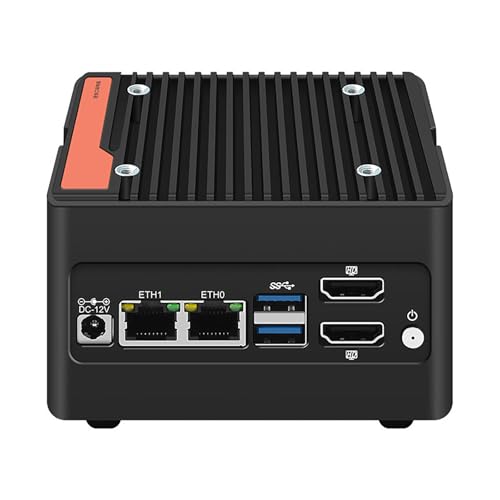
- Pocket-size 100mm x 100mm x 58.5mm design
- Supports four M.2 2280 NVMe SSDs
- Dual 2.5GbE, dual HDMI 2.0, and USB 3.2 Gen2
Best For: Mobile users who need a tiny, carryable NAS/server
Outdoor Backup NAS – PocketCloud Portable NAS for SSD and SD Card
Among portable nas enclosures, PocketCloud stands out for users who want true grab-and-go backup with multiple ways to save files. It combines an M.2 NVMe slot, SD card support, Wi‑Fi 6, AP mode, and app control, so you can move media off cameras and phones without relying on a desk-bound setup.
Best For: Photographers, vloggers, and travelers who need portable private backup with battery power.
Pros:
- Supports up to 8TB on its M.2 NVMe slot, with expansion to 16TB using the matching Dock.
- Offers five backup methods, including SD cards, USB drives, Wi‑Fi 6, AP mode, and Dock-based Ethernet.
- Dual 3200mAh replaceable batteries provide up to six hours of continuous use and twenty-day standby.
- Aluminum alloy enclosure, LCD display, and one-click backup make it practical in the field.
Cons:
- Sold diskless, so you still need to buy the NVMe SSD separately.
- Ethernet support requires the separate Dock.
- Battery-driven design is great for mobility, but it adds complexity compared with a simple plug-in enclosure.
For users prioritizing mobility and backup flexibility, PocketCloud is more than a basic enclosure—it is a portable storage hub built for off-grid workflows and fast media protection.
High-Capacity Desktop Bay – WAVLINK 4-Bay SATA Enclosure with HDMI
If you are comparing portable nas enclosures for raw capacity rather than network features, this WAVLINK 4-bay unit is built like a desktop expansion box. It supports 3.5-inch and 2.5-inch SATA drives, reaches up to 88TB, and adds 10Gbps USB-C plus 4K HDMI for users who want storage and display connectivity in one enclosure.
Best For: Desktop users who want a large SATA drive enclosure with fast USB-C and HDMI output.
Pros:
- Four SATA bays support a mix of 3.5-inch and 2.5-inch HDDs or SSDs.
- Up to 88TB capacity gives plenty of room for backups, media, and game libraries.
- 10Gbps USB-C helps move large files efficiently.
- Built-in fans, aluminum shell, and individual bay power switches add practical day-to-day usability.
Cons:
- Not a true network NAS; it is a direct-attached enclosure.
- 2.5-inch drives require additional brackets that are not included.
- HDMI output depends on host port support and the correct USB-C cable.
This is a strong fit when your priority is high-capacity local storage with easy drive swapping and cooling, not an all-in-one cloud-style NAS platform.
Entry Home NAS – Yxk Zero1 2-Bay Private Storage
For buyers looking at portable nas enclosures with more of a home-server feel, the Yxk Zero1 is an entry-level 2-bay NAS aimed at simple private storage. It is designed to gather photos, videos, and files into one hub, while remote access, backup tools, and 2.5GbE make it easier to use than a basic external enclosure.
Best For: Beginners who want a simple private home NAS for media, backups, and remote access.
Pros:
- 2-bay design is straightforward for first-time NAS users.
- 2.5GbE connectivity offers faster transfers than standard 1GbE.
- Remote access works through phone app, desktop client, or web browser.
- Includes RAID options, automated backups, snapshot recovery, and Docker support.
Cons:
- Diskless, so you must purchase the hard drives separately.
- Plastic enclosure is less rugged than metal alternatives.
- It is more of a home NAS than a truly portable enclosure.
Yxk Zero1 makes sense if you want a low-friction way to start with private storage and shared access, but do not need a rugged travel-focused unit.
Speed-First NVMe Array – TERRAMASTER D4 SSD 4-Bay Enclosure
Among portable nas enclosures, the TERRAMASTER D4 SSD is the pick for people who care most about speed and compact size. It holds four M.2 NVMe SSDs, connects over 40Gbps USB Type-C, and is aimed at workflows like video editing, large file transfers, and high-speed backup on a desktop or mini-PC setup.
Best For: Creators and power users who need a compact, ultra-fast SSD enclosure for heavy file work.
Pros:
- 40Gbps connection supports very fast transfers, with up to 3,224MB/s listed with four SSDs.
- Compact, book-sized design fits well on desks or in travel bags.
- Tool-free installation and hot-swappable bays simplify SSD changes.
- Active cooling and temperature sensors help keep the enclosure quiet and stable.
Cons:
- No built-in RAID, so storage management is handled separately.
- Diskless design means you need to supply all SSDs yourself.
- Best speed depends on a host device that supports the right high-bandwidth connection.
This enclosure is best viewed as a fast external SSD array rather than a full NAS, but it is a compelling choice when throughput matters more than network sharing features.
Starter-Friendly Personal NAS – UGREEN DH2300 2-Bay for Beginners
If you want portable NAS enclosures that are simple to set up for personal storage, the UGREEN NAS DH2300 is aimed at beginners moving away from scattered cloud folders and external drives. It focuses on private photo, video, and file backup, with automatic backups across Windows, macOS, iOS, and Android.
Best For: First-time NAS buyers who want easy personal storage, backup, and photo organization without advanced server features.
Pros:
- 2-bay design with up to 64TB capacity for long-term personal storage.
- Automatic cross-device backups and AI photo tagging for easier searching.
- Private, one-time purchase alternative to recurring cloud storage fees.
- Includes RAID options, 2-factor authentication, permissions, and encrypted transfers.
Cons:
- Does not support Docker or virtual machines.
- Wireless use requires an external USB adapter; Ethernet is the recommended connection.
- Positioned as an entry-level NAS, so it is not built for heavy multitasking.
Overall, the DH2300 is a practical pick if you want a straightforward NAS enclosure for personal backups and media storage rather than a feature-heavy homelab box. It keeps the experience simple while still giving you local control over your files.
Compact All-SSD NAS – TERRAMASTER F8 SSD Plus
Among portable NAS enclosures, the TERRAMASTER F8 SSD Plus stands out for users who want a tiny, high-speed all-SSD design. Its palm-sized footprint, 10GbE networking, and NVMe-only bays make it a strong fit for fast local storage, especially where low noise and compact placement matter.
Best For: Small businesses and advanced home users who need a compact, quiet, high-performance SSD NAS.
Pros:
- Core i3-N305 processor, 16GB DDR5 memory, and 10GbE port for fast performance.
- Eight M.2 NVMe bays support up to 64TB total capacity.
- Very compact and lightweight design that fits easily on a desk or shelf.
- Whisper-quiet operation with SSD cooling and standby noise below 19dB.
Cons:
- Diskless model, so you must buy SSDs separately.
- NVMe-only build may not suit buyers looking for HDD storage expansion.
- Best value is tied to performance-focused use cases rather than basic file storage.
In practice, the F8 SSD Plus is a niche but powerful option if you want a travel-friendly footprint without giving up server-grade speed. It is best viewed as a compact performance NAS, not a general-purpose budget enclosure.
Creator and Team NAS – UGREEN DXP4800 GT 4-Bay
If you’re comparing portable NAS enclosures for creator workflows or team storage, the UGREEN DXP4800 GT is built for speed, expansion, and local control. It pairs dual 10GbE networking with support for Docker, virtual machines, SSD expansion, and direct imports from SD cards and USB devices, making it a flexible hub for media and backups.
Best For: Creators, tech enthusiasts, and office teams that want a fast, expandable NAS with advanced app support.
Pros:
- AMD Ryzen Embedded R2514 processor with 8GB DDR4 RAM, expandable to 64GB.
- Dual 10GbE networking plus SSD expansion for fast transfers and editing workflows.
- Supports Docker, virtual machines, SAN Manager, and built-in surveillance features.
- SD card slot, USB 10Gbps ports, and 4K HDMI simplify media ingest and local access.
Cons:
- Drives are not included, so total setup cost depends on your storage choice.
- Advanced features may be more than casual backup users need.
- Best performance depends on compatible networking and storage hardware.
The DXP4800 GT is a strong all-around option if you want one NAS enclosure to handle media, backup, apps, and local surveillance. Its feature set is broad enough for growing workflows, but it still keeps data stored locally for better privacy control.
DIY Expandable Pick – 8-Bay Hot-Swap Storage Enclosure
If you want one of the more flexible portable nas enclosures for a custom home or small-office build, this 8-bay case gives you plenty of room to grow. It supports both 3.5-inch HDDs and 2.5-inch SSDs, and the hot-swap design makes drive changes easier without shutting the whole system down.
Best For: DIY NAS users who want a roomy, hot-swap enclosure for media storage, backups, or surveillance archives.
Pros:
- 8 hot-swap bays support 3.5-inch HDDs and 2.5-inch SSDs
- Dual independent air channels and 3 temperature-controlled silent fans
- Wide compatibility with Mini-ITX and Micro-ATX boards, plus 1U/FLEX power supplies
- Full steel chassis, drive status lights, and front USB 3.0 port
Cons:
- Motherboard, CPU, and other core components are not included
- Its rack-style form factor is larger than compact portable units
- Assembly is DIY-focused, so it is best suited to builders
This is a strong choice if capacity and build flexibility matter more than plug-and-play simplicity. The cooling setup, hot-swap bays, and broad motherboard support make it well suited to a customized NAS project.
Performance Leader – 6-Bay Enterprise Storage System
For buyers comparing portable nas enclosures that prioritize speed and capacity, this 6-bay desktop NAS is the most performance-oriented option in the group. It combines a 12th Gen Intel Core i3-1215U processor, dual networking, and support for both SATA and M.2 NVMe storage in one diskless system.
Best For: Business users and advanced home users who want fast networking, strong processing, and large local storage.
Pros:
- 12th Gen Intel Core i3-1215U with 6 cores and 8 threads
- 1x 10GbE and 1x 2.5GbE ports, with link aggregation support up to 20G bandwidth
- Six SATA bays plus two M.2 NVMe slots, up to 208TB claimed capacity
- Supports JBOD and multiple RAID levels, including RAID0/1/5/6/10
Cons:
- Drives are not included
- It uses wired Ethernet only and does not support Wi-Fi
- Speed depends on your router, CPU, drives, and file sizes
This NAS stands out for users who care about throughput, local control, and room to expand. If you need a serious desktop NAS foundation rather than a minimal enclosure, this model is built for that role.
Most Portable Option – 4-Bay NVMe Mini Server
If your priority is a truly compact portable nas enclosure, this pocket-sized mini NAS is the most travel-friendly option here. It uses an Intel i3-N305 platform and splits out four M.2 2280 NVMe drives, giving you a small footprint with fast solid-state storage.
Best For: Mobile professionals who want a tiny NAS/server they can carry between work locations.
Pros:
- Very compact 100mm x 100mm x 58.5mm size
- Supports four M.2 2280 NVMe SSDs via adapter board
- Dual 2.5GbE LAN, dual HDMI 2.0, and USB 3.2 Gen2 ports
- Built-in cooling with copper-sheet heat conduction and a temperature-controlled fan
Cons:
- Sold as NO RAM and NO SSD
- Best suited to NVMe-based builds rather than traditional SATA storage
- Portable size means capacity depends on the SSDs you add
This model is ideal when portability and speed matter more than raw drive count or easy-to-scale bulk storage. It is a practical pick for a tiny mobile office server or a compact SSD-based NAS project.
How We Picked the Best Portable Nas Enclosures
We prioritized Portable Nas Enclosures and compact NAS-style systems that offer a useful mix of capacity, expandability, connectivity, and ease of use. The best models for this list support modern backup workflows, reliable file sharing, and enough performance for everyday transfers, photo libraries, and media access.
We also looked at drive bay count, diskless flexibility, NVMe or SATA support, thermal design, networking speed, and whether the system makes sense for beginners or power users.
Quick Comparison
If you want the simplest setup, a 2-bay option is usually the easiest starting point. For larger libraries or more redundancy, 4-bay and 6-bay systems give you more room to grow. If speed matters most, NVMe-based Portable Nas Enclosures can deliver faster responsiveness for backups and working files, while multi-bay HDD models generally win on cost per terabyte.
Key Buying Factors for Portable Nas Enclosures
Drive Type and Capacity
Check whether the enclosure supports HDDs, SSDs, or M.2 NVMe drives, and look closely at the maximum usable capacity. Some models are built for dense storage, while others are better for fast, compact flash-based setups.
Connectivity and Network Speed
For local transfers and multi-user access, USB-C, 2.5GbE, 10Gbps, or higher-speed networking can make a noticeable difference. Match the connection type to your devices so you do not bottleneck performance.
Cooling and Noise
Compact systems can run hot, especially when packed with SSDs or multiple hard drives. Look for temperature-controlled fans, good airflow, and a case design that helps maintain stable performance during longer transfers.
Software and Backup Features
For many buyers, the biggest advantage of Portable Nas Enclosures is the backup experience. Features like one-click backup, phone photo sync, app support, and easy file sharing can matter more than raw hardware specs.
Who Should Buy Which Portable Nas Enclosures?
Beginners and personal users should lean toward simple 2-bay systems with easy setup and mobile backup tools. Creators and office teams often benefit more from 4-bay or 6-bay models that improve capacity and flexibility. If you need maximum speed for scratch files or portable project storage, NVMe-based options are the best fit. For long-term archives or mixed media libraries, multi-bay HDD enclosures usually offer the best value.
In short, the right choice depends on whether you value portability, speed, capacity, or ease of use most. Choose the smallest system that still leaves room for your storage needs a year or two from now.