Choosing among the best paper shredders for small businesses means balancing security, speed, capacity, and daily workload. The right machine should protect sensitive documents without creating constant jams, overheating, or emptying interruptions.
This roundup compares 10 cross-cut and micro-cut shredders, including autofeed options and larger office models, so you can match shredder performance to your team’s volume and workspace.
Best 10 Paper Shredders for Small Businesses Picks for 2026
Heavy-Duty Office Pick

- 18-sheet capacity and 30-minute runtime
- P-4 cross-cut security with SafeSense protection
- 9-gallon bin and quiet shared-office operation
Best For: Shared offices with frequent, high-volume shredding
Hands-Free Volume Choice
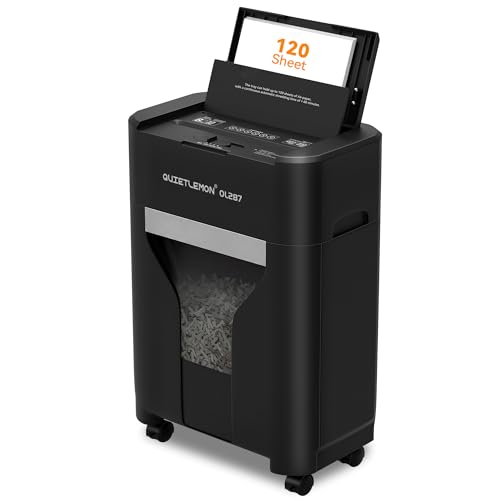
- 120-sheet auto-feed tray for batch jobs
- P-4 micro-cut security and quiet operation
- 40-minute auto-feed runtime with a 5.28-gallon bin
Best For: Small offices needing unattended document shredding
Bulk Autofeed Specialist

- 150-sheet auto-feed tray for large batches
- P-4 micro-cut security and 7.4-gallon bin
- Handles paper, cards, staples, and small clips
Best For: Bulk shredding in a designated office area
Compact Deskside Pick
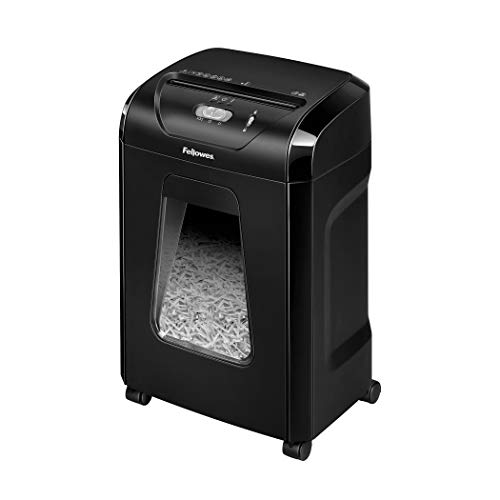
- 14-sheet P-4 cross-cut shredding
- Quiet operation with safety lock
- 5-gallon bin and 10-minute runtime
Best For: Individual desks with moderate shredding workloads
Best High-Security Pick

- P-4 micro-cut security
- 20-minute runtime
- 6-gallon pull-out bin
Best For: Small offices needing higher-security shredding
Best Compact Option
Woolsche 10-Sheet Cross-Cut Shredder

- P-4 cross-cut security
- Compact portable design
- 3.43-gallon visible basket
Best For: Small offices with moderate shredding volume
Best Value Choice

- P-3 cross-cut security
- 5-gallon collection bin
- Automatic overheat protection
Best For: Routine small-office document shredding
Best Overall for Small Offices
Woolsche 12-Sheet Cross-Cut Shredder
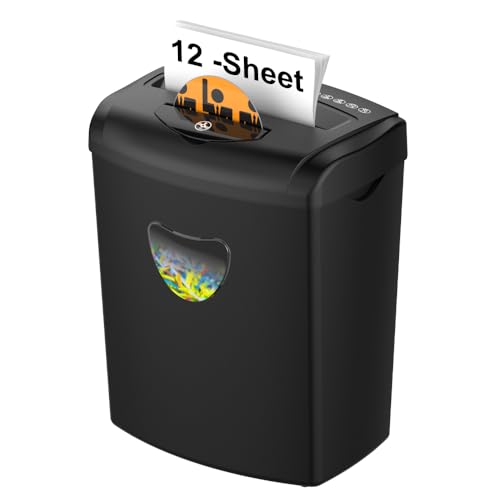
- P-4 cross-cut security for sensitive records
- 5.55-gallon basket for fewer emptying stops
- Shreds paper, cards, CDs, staples, and clips
Best For: Small offices needing versatile everyday shredding
Best Compact Budget Pick
Amazon Basics 8-Sheet P-4 Shredder

- P-4 cross-cut security in a compact design
- 3.7-gallon bin for light office use
- Handles paper, cards, staples, and small clips
Best For: Small teams with light, occasional shredding
Best for High-Volume Batches
Amazon Basics 24-Sheet Shredder
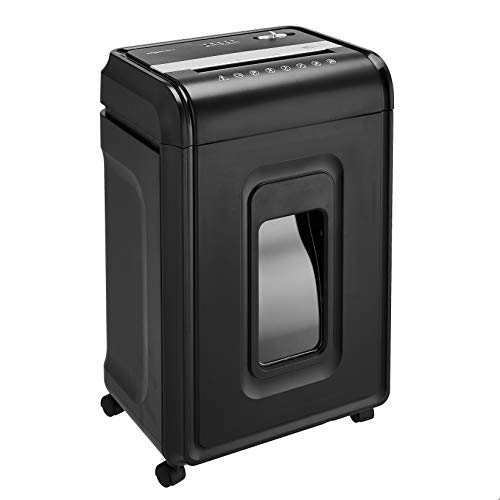
- 24-sheet capacity for faster batch shredding
- 40-minute runtime with P-4 security
- 7-gallon pull-out bin and included casters
Best For: Small offices handling frequent document batches
Heavy-Duty Office Pick – Fellowes Powershred 99Ci
For small businesses handling confidential paperwork, the Fellowes Powershred 99Ci is a capable choice among paper shredders for small businesses. It accepts up to 18 sheets per pass, produces P-4 cross-cut particles, and runs continuously for up to 30 minutes.
Best For: Shared offices that need extended runtime, quiet operation, and a large pull-out waste bin.
Pros:
- 18-sheet capacity with a 30-minute continuous runtime
- P-4 cross-cut security for confidential documents
- Shreds staples, paper clips, credit cards, CDs/DVDs, and junk mail
- SafeSense protection, jam assistance, and a 9-gallon bin
Cons:
- At 36.4 pounds, it is less convenient to move than a compact shredder
- Its 17.31-inch depth may require considerable floor or desk-side space
The 99Ci is a strong fit when several employees share one machine and shredding volume matters more than portability. Its combination of capacity, runtime, safety features, and a large bin makes it particularly practical for busy office workflows.
Hands-Free Volume Choice – QUIETLEMON OL287 2.0
The QUIETLEMON OL287 2.0 stands out among paper shredders for small businesses because its auto-feed tray can handle up to 120 sheets hands-free. Its micro-cut design delivers P-4 security, while the machine offers up to 40 minutes of auto-feed runtime.
Best For: Small offices that want hands-free batch shredding in a relatively compact, quiet machine.
Pros:
- 120-sheet auto-feed capacity and up to 40 minutes of continuous operation
- Micro-cut P-4 output creates particles measuring 4 x 12 mm
- Quiet operation rated below 63 dB
- Automatic shutoff when the bin is removed, plus a 5.28-gallon bin
Cons:
- Manual feeding is limited to 8 sheets and 10 minutes of runtime
- Manual mode is not suitable for CDs or metal cards
- Warranty coverage is listed as one year
This model is especially useful when employees need to load a stack and return to other tasks. Businesses should distinguish between its generous auto-feed specifications and the more limited manual-feed capacity when choosing it for daily use.
Bulk Autofeed Specialist – Staples 150-Sheet Micro-Cut
For businesses with recurring piles of paperwork, the Staples 150-Sheet Micro-Cut shredder offers one of the larger auto-feed capacities in this group. It combines P-4 micro-cut security with a 7.4-gallon pull-out bin and a stated shredding rate of approximately 7 feet per minute.
Best For: Small-business users who prioritize bulk auto-feed capacity and a large collection bin.
Pros:
- Top-load tray accepts up to 150 sheets
- P-4 micro-cut output measures 4.3 x 12 mm
- 7.4-gallon pull-out bin supports larger shredding jobs
- Shreds paper, credit cards, staples, and small paper clips
Cons:
- Its 25.19-inch width takes substantial floor or office space
- At 65 dB, it may be more noticeable than quieter alternatives
- The supplied specifications do not state a continuous runtime
The Staples model is a practical bulk-processing option when reducing manual loading is the main goal. Its wide body and larger bin favor a designated office area rather than a compact workstation, but the generous tray and security level suit routine document disposal.
Compact Deskside Pick – Fellowes 14C10
The Fellowes 14C10 is a straightforward deskside option for small businesses that need secure everyday document disposal without a large commercial footprint. It handles up to 14 sheets per pass, uses P-4 cross-cut security, and includes a 5-gallon pull-out bin.
Best For: Individual workstations and small offices with moderate shredding needs.
Pros:
- 14-sheet capacity with P-4 cross-cut output
- Shreds credit cards, paper clips, staples, and unopened junk mail
- Quiet operation and a safety lock for added protection
- 5-gallon bin holds over 250 shredded sheets
Cons:
- 10-minute continuous runtime requires cooldowns during larger jobs
- Its capacity is lower than the 120- and 150-sheet auto-feed models
- It has no listed auto-feed function
The 14C10 makes sense when shredding is performed at individual desks rather than in centralized, high-volume batches. It offers useful media handling and secure P-4 output in a relatively compact design, but larger operations may prefer a longer runtime or auto-feed tray.
Best High-Security Pick – 12-Sheet Micro-Cut Shredder
For small businesses handling sensitive paperwork, the Amazon Basics 12-Sheet Micro-Cut Shredder offers P-4 security with a 20-minute runtime. Its larger 6-gallon pull-out bin, casters, and media-shredding capability make it practical for regular office use.
Best For: Small offices that prioritize higher-security document disposal and longer shredding sessions.
Pros:
- Micro-cut output meets P-4 security standards.
- Handles up to 12 sheets, staples, small paper clips, CDs, DVDs, and credit cards.
- 20-minute runtime, 6-gallon pull-out bin, casters, and useful status indicators.
Cons:
- Requires a 20-minute cool-down after its rated runtime.
- Its 22-pound body is larger and heavier than compact office models.
This is a strong choice when security and capacity matter more than compact storage. The micro-cut design and extended runtime suit businesses shredding sensitive documents throughout the workday.
Best Compact Option – Woolsche 10-Sheet Cross-Cut Shredder
The Woolsche 10-Sheet Cross-Cut Shredder is a compact choice for small businesses that need P-4 document security without a large footprint. Its transparent 3.43-gallon basket, portable handle, and jam-release reverse mode support everyday office convenience.
Best For: Small offices and home-office workspaces with moderate shredding needs and limited storage space.
Pros:
- P-4 cross-cut security with a stated 10-sheet capacity.
- Shreds paper, staples, clips, credit cards, and CDs.
- Compact design, portable handle, transparent basket window, and 1-year replacement guarantee.
Cons:
- Auto mode is rated for up to 5 minutes at a time.
- The 3.43-gallon basket requires more frequent emptying than larger models.
For a smaller office that shreds periodically rather than continuously, this model balances security and portability. Its shorter operating window makes it less suitable for large document backlogs.
Best Value Choice – 12-Sheet Cross-Cut Shredder
For small businesses seeking straightforward everyday document disposal, this Amazon Basics 12-Sheet Cross-Cut Shredder combines a 12-sheet capacity with automatic overheat protection. Its 5-gallon bin and four-mode control make it a practical general-purpose option.
Best For: Offices needing affordable cross-cut shredding for routine paperwork and occasional credit-card disposal.
Pros:
- Shreds up to 12 sheets at once into P-3 cross-cut pieces.
- Accepts staples, small paper clips, and one credit card at a time.
- 5-gallon bin, forward and reverse controls, and LED indicators for power, overheat, and overload.
Cons:
- Its 9-minute runtime is shorter than the micro-cut model’s rated runtime.
- Requires a 30-minute cool-down after the rated runtime.
- Not suitable for metal credit cards.
This model is well suited to routine office shredding when P-3 security is sufficient. It offers useful capacity and controls, though businesses with frequent high-volume jobs may prefer a longer-runtime machine.
Best Overall for Small Offices – Woolsche 12-Sheet Cross-Cut Shredder
For paper shredders for small businesses, the Woolsche CD218 offers a practical balance of capacity, security, and media handling. Its P-4 cross-cut design produces 4 x 35 mm particles, while the 5.55-gallon basket helps reduce emptying frequency in a small office.
Best For: Small businesses that need to shred paper, cards, CDs, staples, and clips with one compact office machine.
Pros:
- Shreds up to 12 sheets at a time and meets P-4 security standards.
- Handles credit cards and CDs, cutting each into four pieces.
- Includes a 5.55-gallon basket, jam-clearing reverse function, and safety features.
Cons:
- Runs for up to 5 minutes before requiring at least 30 minutes of cooldown.
- The listed standard sheet capacity is 10, despite the 12-sheet maximum claim.
The Woolsche is a strong all-around choice when a small business wants higher throughput than a basic personal shredder and needs to process more than paper. Its short duty cycle is the main limitation for large document batches.
Best Compact Budget Pick – Amazon Basics 8-Sheet P-4 Shredder
The Amazon Basics 8-Sheet shredder is a compact option for paper shredders for small businesses where space and light-duty workloads matter. It provides P-4 cross-cut security, handles common office fasteners, and includes automatic overheat protection.
Best For: Small teams with modest shredding volumes, limited floor space, and routine paper or credit-card disposal needs.
Pros:
- Produces P-4 particles measuring approximately 5 x 18 mm.
- Accepts up to 8 sheets plus credit cards, staples, and small paper clips.
- Compact 3.7-gallon bin and LED indicators help with everyday operation.
Cons:
- Limited to a 3-minute runtime followed by a 30-minute cooldown.
- Does not handle CDs or metal credit cards.
- Its 8-sheet capacity is better suited to lighter workloads than batch shredding.
This model makes sense for a small office that shreds intermittently rather than continuously. The compact footprint and lower sheet capacity keep it convenient, but heavier document-processing needs call for a larger, longer-running machine.
Best for High-Volume Batches – Amazon Basics 24-Sheet Shredder
For small businesses processing larger stacks of paperwork, this 24-sheet Amazon Basics model offers substantially more capacity than compact office shredders. It combines P-4 cross-cut security with a 7-gallon pull-out bin and a 40-minute operating period.
Best For: Small offices that regularly shred large document batches and need a roomy bin with mobility.
Pros:
- Shreds up to 24 sheets at once and runs for up to 40 minutes.
- Provides P-4 cross-cut security for documents and handles CDs, DVDs, cards, staples, and clips.
- Large 7-gallon pull-out basket, casters, and anti-jam auto reverse support office convenience.
Cons:
- Requires a 50-minute cooldown after the maximum runtime.
- At 31.6 pounds, it is considerably heavier than compact models.
- Its larger body may be less suitable for very tight workspaces.
This is the most capable choice in the group for sustained small-business shredding. The high sheet capacity and long runtime improve productivity, while the larger footprint and weight make it better suited to a dedicated office location.
How We Picked the Best Paper Shredders for Small Businesses
We evaluated these models against the factors that matter most in a small office: cut security, sheet capacity, operating convenience, bin size, jam resistance, duty cycle, and the ability to handle cards, CDs, staples, or clips where advertised. We also included a range of sizes and prices because a solo professional has different needs from a busy office with several users.
Cross-cut and micro-cut shredders are generally preferable to strip-cut models for business records. However, advertised sheet capacity is not the only performance measure. Real-world usability also depends on continuous runtime, cooling requirements, feed opening, and how easily the waste bin can be removed and emptied.
Quick Comparison
| Best For | What to Prioritize | Recommended Type |
|---|---|---|
| Occasional home-office paperwork | Compact footprint and simple controls | 8- to 12-sheet cross-cut |
| Confidential client or employee records | Smaller particles and P-4 or higher security | Micro-cut |
| Multiple users | Higher capacity, larger bin, longer runtime | 14- to 24-sheet cross-cut |
| Large batches | Automatic feeding and reduced supervision | Autofeed shredder |
Key Buying Factors for Paper Shredders for Small Businesses
Security Level
For ordinary internal paperwork, a P-4 cross-cut shredder is a practical baseline. Choose micro-cut security when handling tax records, customer data, medical information, payroll documents, or other material that should be difficult to reconstruct.
Capacity and Workflow
Manual sheet ratings typically range from 8 to 24 sheets, but feeding fewer pages at a time can reduce jams and extend operating life. Autofeed models are useful for prepared stacks, while a larger basket means fewer interruptions during batch jobs.
Runtime and Cooling
Check the rated continuous run time and cooling period if several employees will share the machine. A high sheet count does not necessarily mean the shredder can run continuously. Offices with frequent workloads should favor models designed for longer duty cycles.
Convenience and Safety
Look for auto-start and reverse controls, overload or overheat protection, a clear-full indicator, casters, and an easy-empty bin. A safety lock or automatic shutoff is especially useful in offices accessible to children or visitors.
Who Should Buy Which Paper Shredders for Small Businesses?
Choose a compact cross-cut model if you shred occasional invoices, statements, receipts, and outdated files. It saves space and usually costs less.
Choose a micro-cut model if information security is the priority. These machines produce smaller particles, though they may shred more slowly and require more frequent emptying.
Choose an autofeed model if staff regularly face large stacks and want to keep working while documents are processed. Confirm the feeder’s capacity and whether pages must be prepared or separated first.
Choose a larger 14- to 24-sheet office model for shared use and heavier batches. Prioritize bin size, runtime, and mobility rather than focusing only on maximum sheet capacity. Whichever model you select, avoid exceeding its feed rating, remove binder clips when necessary, and allow cooling breaks recommended by the manufacturer.