A portable power station with expandable batteries can start as a manageable backup source and grow into a much larger home or off-grid power system. That flexibility makes it useful for everything from weekend camping to outages and demanding emergency loads.
This roundup compares 10 models across capacity, AC output, battery chemistry, charging speed, portability, and expansion potential so you can choose a system that fits your actual power needs and budget.
Best 10 Portable Power Station with Expandable Batteries Picks for 2026
Best Modular Add-On
AFERIY 1024Wh Expansion Battery

- Adds 1024Wh to a Nomad1800 Pro system
- Supports up to four expansion batteries
- LiFePO4 cells rated for 4000+ cycles
Best For: Nomad1800 Pro owners expanding home, RV, or camping power
Best for Whole-Home Backup

- 3584Wh capacity with 3600W output
- Expandable up to 21kWh per unit
- Rollable design with dual-voltage parallel capability
Best For: Extended household backup and high-demand appliances
Best High-Capacity Solar Option

- 3840Wh capacity expands to 11.5kWh
- 3600W output with under-10ms UPS transfer
- Offers AC, solar, car, and combined charging
Best For: High-capacity home backup and off-grid solar use
Best Compact Expandable Station
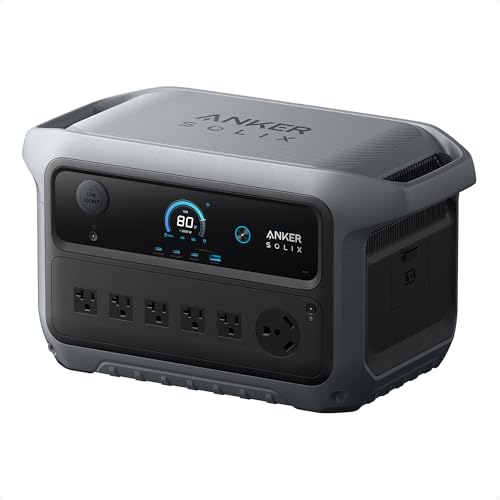
- 2048Wh expands to 4kWh
- 2400W output with 4000W peak
- 58-minute full recharge claim under supported conditions
Best For: Portable camping, road-trip, and emergency backup power
Maximum-Capacity Pick
ABOK Ark3600 Expandable Power Station

- 3,840Wh capacity expands to 11,520Wh
- 3,600W output and 4,500W peak
- 15 ports plus Bluetooth app control
Best For: Extended backup, RV use, and high-demand appliances
Fast-Charging Professional Pick
OUPES Mega 1 Expandable Power Station

- Expands from 1,024Wh to 5,120Wh
- 0–80% AC charging in 36 minutes
- 2,000W output with sub-20ms UPS
Best For: Professional use, home backup, and fast recharging
Compact All-Rounder
BLUETTI AC180 Portable Power Station

- 1,152Wh LiFePO4 battery and 1,800W output
- Full AC charge in about one hour
- 37.4-pound design with solar and UPS support
Best For: Camping, outages, and portable everyday backup
Best Overall
Jackery HomePower 1000 Plus v2

- Expands from 1,024Wh to 11kWh
- 1,800W output with 3,600W surge
- 10ms UPS and priority-load controls
Best For: Home backup with substantial future capacity needs
Best for Fast Charging

- Full charge in a stated 56 minutes
- Expands to 5kWh with EcoFlow batteries
- 13 outlets and 1,800W AC output
Best For: Fast-turnaround emergency and outdoor power
Best High-Output Value
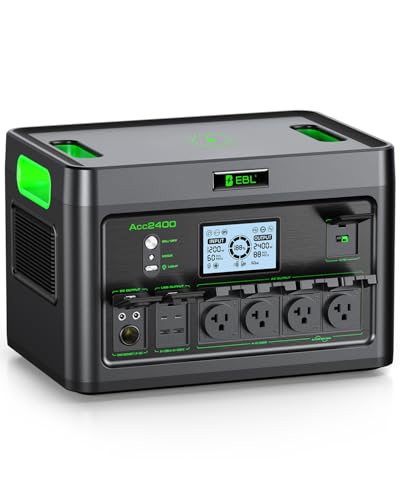
- 1,843.2Wh capacity with 2,400W output
- Supports up to 12 devices at once
- 0.1-second emergency backup mode
Best For: High-demand home, jobsite, and group outdoor use
Best Modular Add-On – AFERIY 1024Wh Expansion Battery
If you need a portable power station with expandable batteries, this AFERIY pack offers a straightforward way to increase the capacity of a compatible Nomad1800 Pro system. It is an expansion battery only—not a standalone power station—and supports up to four add-on batteries for a total system capacity of 5120Wh.
Best For: Nomad1800 Pro owners who want to expand capacity for home backup, RV use, camping, or off-grid power without replacing the main unit.
Pros:
- Adds 1024Wh of capacity and supports up to four expansion batteries.
- Uses LiFePO4 cells rated for more than 4000 charge cycles.
- Includes a connection cable, app monitoring, and up to seven years of support.
Cons:
- Cannot operate independently as a power station.
- Compatible only with the AFERIY Nomad1800 Pro.
This is a useful modular upgrade when you already own the correct AFERIY main unit. Confirm compatibility before buying, since the battery has no standalone outputs or inverter.
Best for Whole-Home Backup – Jackery HomePower 3600 Plus
The Jackery HomePower 3600 Plus is a strong choice if you want a portable power station with expandable batteries for demanding backup needs. It provides 3584Wh of capacity, 3600W output, and expansion potential up to 21kWh per unit or 43kWh with multiple units.
Best For: Homeowners who need extended outage coverage for appliances such as pumps, heaters, dryers, and other high-demand equipment.
Pros:
- 3600W output with 7200W available in parallel and 120V/240V support in parallel.
- Large expandable capacity suited to extended home backup.
- Wheeled luggage-style design with a telescopic handle for easier movement.
- Supports AC, solar, hybrid AC+DC, and gas-generator charging.
Cons:
- Weighs 77.2 pounds, so it is less convenient for frequent lifting.
- Home backup setup may require the separately referenced MTS arrangement.
With substantial output, dual-voltage capability when used in parallel, and a rolling design, this Jackery is aimed more at serious home backup than lightweight day trips. Its five-year manufacturer warranty is also shorter than some of the claimed battery lifespan.
Best High-Capacity Solar Option – AFERIY 3840Wh Power Station
For shoppers comparing a portable power station with expandable batteries, this AFERIY combines a 3840Wh LiFePO4 battery with 3600W continuous output and expansion up to 11.5kWh. It also includes solar charging, UPS functionality, app control, and 15 output ports for varied backup and off-grid needs.
Best For: Home backup users, campers, and mobile workstations that need substantial capacity, multiple connection options, and solar-recharge capability.
Pros:
- 3840Wh capacity expands to approximately 11.5kWh.
- 3600W continuous output with 7200W starting wattage.
- UPS transfer time under 10ms for supported critical devices.
- Four recharge methods, including AC, solar, car charging, and AC plus solar.
Cons:
- Large and heavy, with listed weight around 80 to 104.7 pounds depending on the specification.
- Actual runtime depends on the connected load and operating conditions.
- Expansion batteries and solar panels may add substantially to the overall setup.
This model is built for capacity and versatility rather than easy carrying. Its fast 1.5-hour recharge claim applies under supported input conditions, so buyers should verify their charging equipment and expected loads before relying on that speed.
Best Compact Expandable Station – Anker SOLIX C2000 Gen 2
The Anker SOLIX C2000 Gen 2 is a practical portable power station with expandable batteries for camping, road trips, and emergency backup. Its 2048Wh LiFePO4 battery can expand to 4kWh with an additional battery, while the 2400W rated output and 4000W peak output support many appliances.
Best For: Users who want expandable capacity in a comparatively compact 41.7-pound package for camping, RV use, refrigeration, and backup power.
Pros:
- Expandable from 2048Wh to 4kWh with an add-on battery.
- 2400W rated output and 4000W peak output can handle many demanding devices.
- Recharges to 100% in as little as 58 minutes under supported conditions.
- 800W alternator charging can fully recharge the unit in about three hours.
Cons:
- Expansion is limited to 4kWh, less than the capacity of the larger systems here.
- Its listed runtime and output depend on the connected appliances and load.
- The product details contain inconsistent wattage specifications, so verify the final rating before purchase.
This Anker balances useful output, fast charging, and portability better than many larger expandable systems. It is a particularly sensible fit when you want extra runtime for a refrigerator or air conditioner without moving an 80-pound-class power station.
Maximum-Capacity Pick – ABOK Ark3600 Expandable Power Station
The ABOK Ark3600 is a strong choice if you need a portable power station with expandable batteries for extended backup or high-demand appliances. Its 3,840Wh capacity can grow to 11,520Wh, while the 3,600W rated output and 4,500W peak output cover a broad range of household and outdoor equipment.
Best For: RV trips, emergency backup, extended off-grid use, and powering multiple appliances or tools.
Pros:
- Expandable capacity from 3,840Wh to 11,520Wh.
- 3,600W rated output with 4,500W peak power.
- 15 output ports, including 100W USB-C, AC, DC, and 12V vehicle-style connections.
- LiFePO4 battery rated for over 4,000 cycles, with Bluetooth app control.
Cons:
- At 92 pounds, it is considerably heavier than compact power stations.
- Its larger footprint may be less convenient for short camping trips.
The Ark3600 stands out for buyers who prioritize capacity and appliance support over lightweight portability. Combined AC and solar charging can fully recharge it in about 1.29 hours according to the supplied specifications, making it a practical large-format backup system.
Fast-Charging Professional Pick – OUPES Mega 1 Expandable Power Station
The OUPES Mega 1 suits shoppers seeking a portable power station with expandable batteries that can scale with changing power needs. It starts with a 1,024Wh capacity and 2,000W continuous output, then expands to as much as 5,120Wh by connecting up to two B2 Extra Batteries.
Best For: Home backup, mobile offices, professional equipment, camping, and emergency power.
Pros:
- Expands from 1,024Wh to 5,120Wh without additional inverters or complex wiring.
- Reaches 0–80% charge in 36 minutes through AC, or 26 minutes with AC and solar together.
- Provides 2,000W continuous output and 4,500W surge power with pure sine wave AC.
- Includes sub-20ms UPS transfer, app control, and LiFePO4 cells rated for 3,500+ cycles.
Cons:
- Extra batteries are needed to reach the maximum 5,120Wh capacity.
- The supplied details identify the base capacity as 1,024Wh, which may be limiting without expansion.
The Mega 1 is particularly compelling when recharge speed and modular growth matter. Its UPS feature and pure sine wave output also make it more suitable than many basic units for sensitive electronics and work-focused setups.
Compact All-Rounder – BLUETTI AC180 Portable Power Station
The BLUETTI AC180 is a practical option for buyers who want a comparatively compact portable power station with expandable batteries for camping, outages, and off-grid use. Its 1,152Wh LiFePO4 battery delivers 1,800W of output, with a 2,700W boost mode for compatible higher-demand loads.
Best For: Camping, home backup, outdoor use, and users who value a lighter, faster-charging unit.
Pros:
- 1,152Wh LiFePO4 battery with 1,800W output and 2,700W peak capacity.
- Charges fully in about one hour using 1,440W AC input.
- Supports up to 500W solar input and can provide UPS response in 20ms.
- Weighs 37.4 pounds and includes a five-year warranty.
Cons:
- The supplied notes do not specify an expandable battery capacity or compatible expansion batteries.
- Its 1,152Wh capacity is smaller than the expandable systems in this roundup.
The AC180 is best viewed as a straightforward, portable backup unit rather than a large modular energy system. Its fast AC charging, solar support, UPS capability, and lower weight make it an appealing everyday choice when maximum capacity is not the priority.
Best Overall – Jackery HomePower 1000 Plus v2
The Jackery HomePower 1000 Plus v2 is a strong choice if you need a portable power station with expandable batteries for home backup, RV use, or off-grid power. Its 1,024Wh starting capacity expands to 11kWh with up to five separately sold battery packs, while 1,800W of AC output handles many high-draw essentials.
Best For: Home backup users who want expandable capacity, UPS protection, and priority-load controls.
Pros:
- Expands from 1,024Wh to 11kWh with up to five add-on batteries.
- 1,800W rated output and 3,600W surge peak support appliances and power tools.
- 10ms UPS switchover, pure sine wave output, and two independently controlled AC circuits.
- Fast wall charging, app control, and a five-year warranty.
Cons:
- Additional battery packs are sold separately.
- Its expansion system is more useful for stationary backup than lightweight travel.
Choose this model when long-term capacity expansion and outage management matter more than having the lightest possible unit. The priority-circuit cutoff feature is particularly useful for preserving power for essential devices during extended outages.
Best for Fast Charging – EcoFlow DELTA 3
The EcoFlow DELTA 3 is a practical portable power station with expandable batteries for emergency power, camping, and home use. It starts at 1,024Wh and can expand to 5kWh through compatible EcoFlow extra batteries, while its combined AC and solar charging setup can reach a full charge in 56 minutes.
Best For: Users who prioritize rapid recharging, broad device support, and compatibility with the EcoFlow battery ecosystem.
Pros:
- Recharges fully in 56 minutes using the stated AC and solar input configuration.
- Expandable from 1,024Wh to 5kWh with compatible EcoFlow battery packs.
- 1,800W AC output, 13 outlets, and X-Boost support for certain higher-demand appliances.
- LiFePO4 cells provide 4,000 cycles to 80% capacity and a stated 10-year daily-use lifespan.
Cons:
- Expansion is limited to 5kWh, less than some larger expandable systems.
- Extra batteries and compatible ecosystem components add to the overall cost.
The DELTA 3 stands out for shoppers who regularly need to replenish power quickly. Its expandable design is best suited to moderate backup requirements, while the multiple ports make it convenient for powering several devices at once.
Best High-Output Value – EBL Acc2400
The EBL Acc2400 is a high-output portable power station with expandable batteries for shoppers who need substantial built-in capacity, although the supplied specifications do not state an expansion limit or compatible add-on battery system. Its 1,843.2Wh battery and 2,400W output are suited to home backup, jobsites, camping, and group use.
Best For: Buyers who want high output, many ports, and large starting capacity for demanding equipment.
Pros:
- Provides 1,843.2Wh of capacity and 2,400W maximum output.
- Supports up to 12 devices simultaneously through AC, USB, DC, car, and wireless charging connections.
- 0.1-second emergency backup mode helps protect computers and file devices during outages.
- LiFePO4 battery is rated for more than 3,500 cycles and a 10-plus-year service life.
Cons:
- The supplied notes do not specify a compatible expandable-battery system or maximum expanded capacity.
- At about 54–55 pounds, it is considerably less convenient to carry than smaller power stations.
- Its warranty is two years, shorter than some competing models in this group.
The Acc2400 makes the most sense when you value output and port variety over compact portability. If expandable storage is essential, confirm battery compatibility and expansion limits before purchasing, since those details are not provided in the listed specifications.
How We Picked the Best Portable Power Station with Expandable Batteries
We focused on models that combine meaningful battery capacity with the ability to add storage, either through dedicated expansion batteries or a scalable product family. We also considered continuous AC output, surge performance, LiFePO4 battery longevity, recharge options, portability, outlet selection, and suitability for home backup or outdoor use.
Because specifications and bundle contents can vary, verify the included accessories, expansion limits, solar-input ratings, and warranty before ordering. A larger watt-hour rating does not automatically mean a better fit if the unit is too heavy or lacks the ports and charging speed you need.
Quick Comparison
- For scalable home backup: Look first at the Jackery HomePower 3600 Plus and high-capacity AFERIY systems.
- For balanced portability and power: The Anker SOLIX C2000 Gen 2 and EF ECOFLOW DELTA 3 are practical middle-ground choices.
- For compact emergency or camping use: The AFERIY 1024Wh, OUPES Mega 1, Jackery HomePower 1000 Plus v2, and BLUETTI AC180 offer easier handling.
- For high-output loads: Compare the 2,400W-to-3,600W models and check their surge ratings before running tools, pumps, refrigerators, or heating appliances.
Key Buying Factors for a Portable Power Station with Expandable Batteries
Capacity and Expandability
Capacity is measured in watt-hours. Around 1,000Wh can cover electronics, lights, networking equipment, and selected small appliances, while 2,000Wh or more is better for refrigerators, longer outages, and multiple devices. Expansion is valuable only when the added battery cost, size, and charging requirements make sense for your use.
Continuous and Surge Output
Match the station’s continuous wattage to the highest sustained load you plan to run. Motors and compressors can demand extra power when starting, so check surge capability for refrigerators, pumps, power tools, and similar equipment. Avoid relying on an advertised peak rating as the normal operating limit.
Battery Chemistry and Charging
LiFePO4 batteries generally offer strong cycle life and stable performance. Fast AC charging is useful before an outage, while solar-input capacity determines how quickly the system can recover away from the grid. If you plan to use solar panels, confirm voltage, amperage, connector compatibility, and whether the advertised solar speed requires ideal conditions.
Portability, Controls, and Safety
Large-capacity units can be heavy, so consider handles, wheels, noise, and storage space. App controls, display accuracy, low-battery alerts, pass-through charging, UPS functionality, overload protection, and temperature safeguards can matter as much as raw capacity.
Who Should Buy Which Portable Power Station with Expandable Batteries?
Choose a compact expandable model if you mainly need camping power, communications equipment, lights, or short emergency coverage. Choose a midrange model if you want a balance of portability, appliance support, and occasional backup. Choose a high-capacity system if your priority is longer outages, refrigerator support, essential circuits, or future solar and battery expansion.